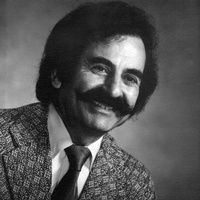
Reza Rezazadeh
November 15, 1916 - November 23, 2017
Obituary
Dr. Reza Rezazadeh, age 101, passed away peacefully in his sleep on Thursday, November 23, 2017, at Manor Care in Platteville. A graveside service will be held at 1:00 P.M. on Saturday, December 2, at Greenwood Cemetery on the UW-Platteville campus. Please make memorials to Wisconsin Public Television. Online condolences may be made at www.melbyfh.com.
Reza was born on November 15, 1916, in Tabriz, Iran, to Golam Hossein Rezazadeh and his wife Rakhshandeh. After completing primary and secondary education in Tabriz, Reza joined the Iranian Air Force, and in 1939 earned a bachelor's degree in aeronautical engineering from the Air Force Engineering College in Tehran. During World War II, Reza fought fiercely against fascism.
After the war, he attended Tehran University Law School. He then served the Iranian government in military judicial positions, including as general prosecutor during the turbulent years of 1949-1953. Under the authority of his office, Reza was able to play a significant role in supporting popular uprisings in favor of Dr. Mossadegh and against the Shah and Prime Minister. In 1953, when it became clear that the democratic government of Iran would be overthrown, Reza fled to the United States, continuing his studies here and fighting demands by the new Iranian government for his extradition back to Iran. Eventually the introduction of a private bill in the United States Congress saved him from deportation. He became a U.S. citizen in 1963. In 1961 Reza accepted a teaching position at UW-Platteville, where for the next 34 years, he taught political theory, philosophy, and law. After retiring as professor emeritus in 1995, he was awarded a Fulbright scholarship to do research in Kazakhstan, where he worked to improve higher education.
Reza was a multi-disciplinary, multi-cultural, and multi-lingual scholar with three doctoral titles in political science, law, and economics (J.D., Ph.D., S.J.D.) and a post-doctoral title in international law and economics. Reza was fluent in five languages. His background in mechanical engineering led to several patented inventions. His thinking was decades ahead of his time. He wrote books about “technological democracy” in 1990, about “techno-democratic economic theory” in 1991, and about “electronic electoral systems” in 2003. The focus of his work was always the pursuit of social justice and equality of opportunity.
Reza possessed the most rare blend of great intellect and profound sentiment. He cared passionately about the socially and economically disadvantaged, and he devoted his entire life to developing and promoting political theories for the betterment of all humankind. Toward this end, he authored two books on political theory and an autobiography. In his “retirement,” in addition to many articles, Reza authored nine more books on such varied subjects as political theory, social justice, personal philosophy, and poetry. He continued to read and write extensively until he was physically unable to do so, merely weeks prior to his death.
Reza was a connoisseur of life, enjoying all it had to offer and relishing the simple things. He enjoyed nature, especially flowers and the passing of seasons. He was a gifted oil painter, an excellent violinist and lover of classical music, and a gourmet chef.
Reza was able to achieve the things he did by his use of rock-solid discipline and strength of will. He kept his body engaged in physical activity in a manner far beyond the normal. He was an avid tennis player for decades. He exercised vigorously, swimming laps in the early morning hours many times each week, until well past his 95th birthday. He lifted weights and rode a stationary bike almost every day until the weeks immediately preceding his death. He ate healthy foods and actively avoided medicines and pills. He meditated daily.
Most of all, Reza was an optimist and an idealist. He always believed that everything would work out in the end. He believed in the basic good instincts of people, in a core individual inclination toward unselfishness. And it was education, he thought, that would bring human beings the ability to make those choices which advanced societal good over personal advantage. Herein lay his unwavering belief in the necessity of education and also the benefits of democracy as a system. He was firm in his conviction that it was possible to create a just society and a more perfect world, and he spent his entire life pursuing and promoting that vision.
Reza is survived by his wife, Connie Rezazadeh; three sons, Farshad Maltes, Madison; Faryad, Chicago; Cyrus, Platteville; grandsons Zhian, Isaac, and Lucia. He was predeceased by his parents, Golam and Rakhshandeh; first wife, Shamsi Rafi; an infant daughter; sons, Farzad and Farhad Rezazadeh; second wife, Gloria Rezazadeh Maltes; and daughter, Farnaz Krafft. The family wishes to thank the many people who cared for Reza: Dr. Jeff White and his staff, the staff of Southwest Health Center, the staffs of Manor Care and St. Croix Hospice, and the Collins family.